By Ana Candido
Modern classic interior design is one of the most enduring and buyer-friendly aesthetics in luxury real estate — and one of the most commonly misunderstood. It's not traditional, and it's not minimalist modern. It lives in the space between them: timeless architectural detail paired with clean, current proportions. I see it throughout Highland Park, Frisco's luxury communities, and the upper end of the Dallas market, and for good reason. Here's what defines the style and how to apply it.
Key Takeaways
- Modern classic design blends classical architectural detail with contemporary simplicity — it avoids both the ornate excess of traditional style and the cold austerity of pure minimalism.
- The palette is restrained: warm neutrals, natural materials, and deliberate contrast rather than color-forward choices.
- Furniture scale and proportion are central to the style — pieces are substantial but never heavy or ornate.
- Modern classic interiors photograph exceptionally well and appeal broadly to luxury buyers, making it a strong choice for resale-minded homeowners.
Defining the Style
Modern classic design is built on a simple premise: take the bones of classical architecture — crown molding, wainscoting, coffered ceilings, symmetrical layouts — and furnish them with contemporary restraint. The result is a space that feels grounded and permanent without feeling dated or fussy.
Where traditional interiors layer ornament on ornament — carved furniture legs, heavy drapery, elaborate pattern — modern classic edits ruthlessly. What remains is the architectural detail that gives a room its character, surrounded by furniture and finishes that feel current. In Highland Park estates and Frisco luxury builds, this shows up as rooms with strong millwork, simple upholstered furniture in solid fabrics, and a palette built around warm whites, soft greiges, and natural stone.
Where traditional interiors layer ornament on ornament — carved furniture legs, heavy drapery, elaborate pattern — modern classic edits ruthlessly. What remains is the architectural detail that gives a room its character, surrounded by furniture and finishes that feel current. In Highland Park estates and Frisco luxury builds, this shows up as rooms with strong millwork, simple upholstered furniture in solid fabrics, and a palette built around warm whites, soft greiges, and natural stone.
The Core Elements of Modern Classic Design
- Strong architectural detail: crown molding, coffered ceilings, paneled walls, wainscoting
- Restrained palette: warm whites, ivory, greige, charcoal, soft black — no busy pattern
- Natural materials: marble, limestone, hardwood, linen, leather, brass
- Symmetrical layouts: furniture arranged in balanced pairs; visual order in every room
- Contrast: dark versus light, matte versus reflective, rough versus smooth
The Palette
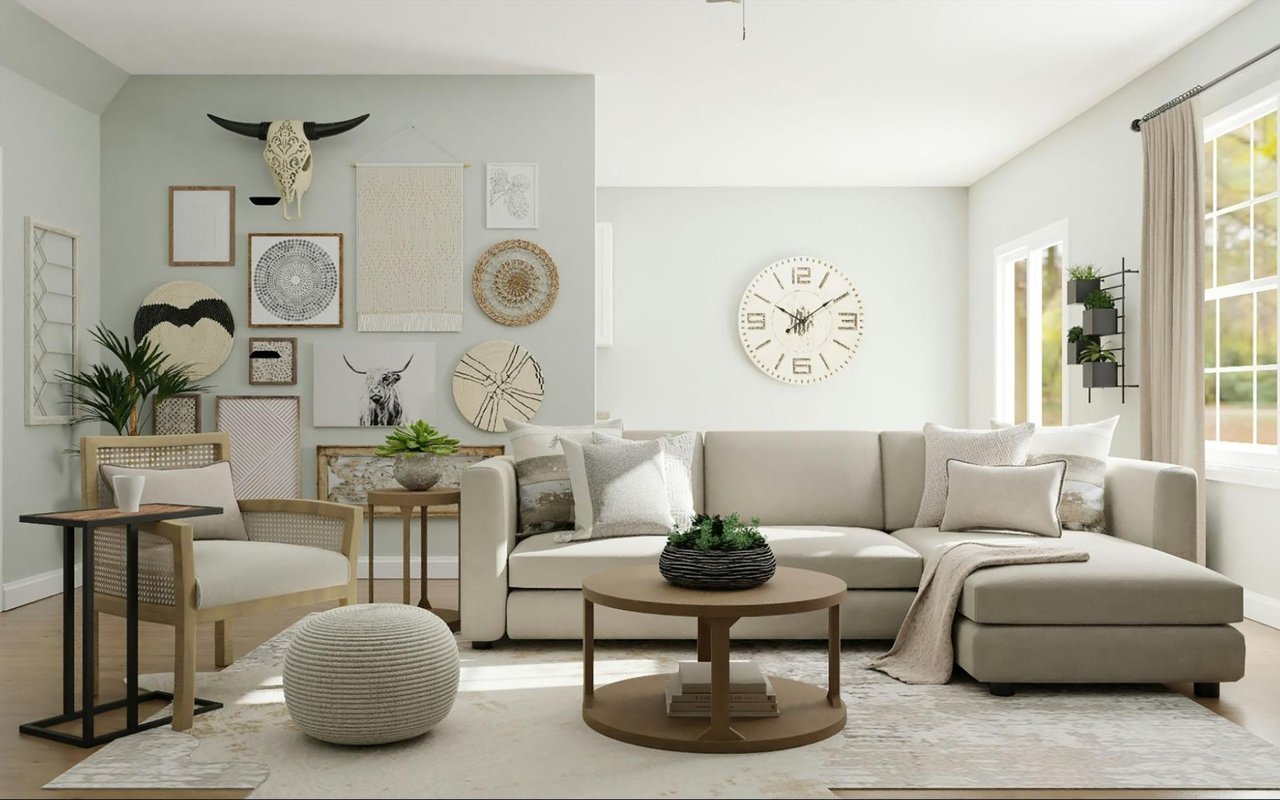
Color in modern classic interiors is deliberately quiet. The work is done by tone, texture, and material rather than hue. A modern classic living room reads as warm and sophisticated without a single color that would read as bold — the warmth comes from aged brass hardware, a limestone fireplace surround, a linen sofa in soft ivory, and wide-plank hardwood floors in a warm stain.
Contrast is introduced through deliberate choices: a dark fluted kitchen island against white cabinetry, black window frames against white walls, a charcoal velvet accent chair in an otherwise pale room. These moments of contrast are what give modern classic spaces their definition without disrupting the overall calm.
Contrast is introduced through deliberate choices: a dark fluted kitchen island against white cabinetry, black window frames against white walls, a charcoal velvet accent chair in an otherwise pale room. These moments of contrast are what give modern classic spaces their definition without disrupting the overall calm.
Palette Choices That Define the Style
- Wall colors: warm white, soft ivory, pale greige — always with warm undertones, never cool gray
- Natural stone: white marble with soft veining, limestone, travertine for countertops and flooring
- Metals: aged brass and unlacquered brass over chrome or brushed nickel
- Wood tones: warm mid-tones — white oak, walnut — in wide-plank floors and cabinetry
- Accent contrast: deep charcoal, soft black, or forest green used sparingly as grounding notes
Furniture and Proportion
Furniture in a modern classic interior is substantial without being heavy. Sofas have clean profiles — tight backs, straight or gently curved arms, quality upholstery in solid fabric. Dining tables are often in natural wood or marble. Coffee tables lean toward stone or metal with simple geometry. Nothing is overly ornate, and nothing is so spare it reads as cold.
Scale is critical. Undersized furniture in a room with strong architectural detail looks accidental and diminishes the architecture. The right modern classic space has furniture that holds its own against the moldings and millwork — pieces that feel considered and intentional rather than incidental.
Scale is critical. Undersized furniture in a room with strong architectural detail looks accidental and diminishes the architecture. The right modern classic space has furniture that holds its own against the moldings and millwork — pieces that feel considered and intentional rather than incidental.
Furniture Choices That Work in Modern Classic Interiors
- Sofas: clean profile, solid upholstery in linen, boucle, or performance velvet
- Dining: natural wood or marble-top table; upholstered chairs with simple frames
- Coffee and side tables: stone, marble, or metal with geometric simplicity
- Case goods: fluted or paneled fronts in natural wood — a nod to classicism without ornate carving
- Lighting: statement fixtures in aged brass or matte black; clean lines over elaborate crystal
Why It Works for Luxury Real Estate
Modern classic interiors photograph beautifully and appeal to the broadest possible luxury buyer pool. They read as timeless rather than trendy — a significant advantage for homeowners in Highland Park and Frisco's upper-tier communities where buyers are sophisticated and expectations are high.
The style also pairs naturally with the architecture common to this market. Highland Park's Georgian and Colonial Revival homes have the moldings and symmetry that modern classic furnishings complement instinctively. Frisco's newer luxury builds — particularly in Starwood and Newman Village — often incorporate coffered ceilings and detailed millwork that invite exactly this approach.
The style also pairs naturally with the architecture common to this market. Highland Park's Georgian and Colonial Revival homes have the moldings and symmetry that modern classic furnishings complement instinctively. Frisco's newer luxury builds — particularly in Starwood and Newman Village — often incorporate coffered ceilings and detailed millwork that invite exactly this approach.
Frequently Asked Questions
How is modern classic different from transitional style?
Transitional design blends traditional and contemporary elements but often sits in a more neutral middle ground — less commitment to classical architecture, less commitment to contemporary restraint. Modern classic is more deliberate: it starts with strong classical architectural bones and applies a firmly contemporary lens. The architectural detail is more prominent and the editing is stricter.
Can modern classic work in a newer Frisco build without original architectural detail?
Absolutely — and it's one of the most common applications I see. Newer luxury homes in Frisco communities often add millwork, coffered ceilings, and paneled walls during construction or renovation. The style creates the architectural character the home needs to feel grounded, then furnishes it with the clean restraint that makes it feel current.
Is modern classic a good choice for resale?
It's one of the strongest choices for resale in the Dallas luxury market. The palette is broadly appealing, the style reads as high-end and considered, and it photographs in a way that draws buyers in at the listing stage. Trend-forward interiors date; modern classic endures.
Contact Ana Candido Today
Whether you're preparing a Highland Park home for sale or designing your new Frisco property from the ground up, getting the aesthetic right matters — and I bring that eye to every listing conversation I have.
Reach out to me at Ana Candido Real Estate and let's talk about your home and your goals.
Reach out to me at Ana Candido Real Estate and let's talk about your home and your goals.