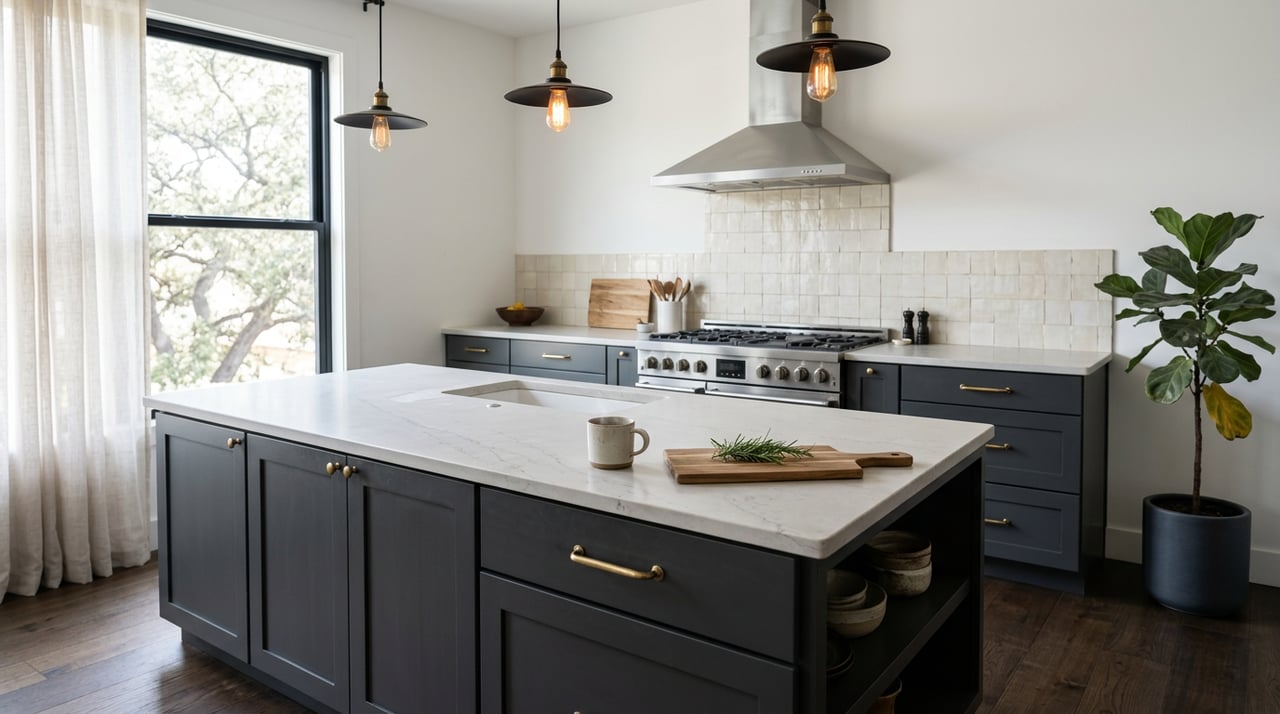
Two homes closed in University Park last month at almost the same price. One was a renovated 1940s cottage on a 50-foot lot near Snider Plaza. The other was a teardown candidate on a wider parcel closer to the Preston Hollow line. The buyers were paying for very different things, and only one of them will still have that money in the property five years from now.
That is the University Park market in one anecdote. The median sale price hovered near $2.995 million in June 2026, with an average around $3.29 million and roughly $704 per square foot per Redfin. Those numbers are accurate, and they explain almost nothing about which offer you should write.
Here is the thesis worth holding: in University Park, you are buying land and a Highland Park ISD attendance zone, not a house. The structure on top depreciates against those two assets. Once you accept that, every other decision in the transaction reorders itself.
The number the median hides
University Park is 3.7 square miles and effectively built out. Land value carries the price. That is why block-to-block variance dwarfs the citywide median. Aggregate MLS data compiled from NTREIS closings between July 2025 and July 2026 shows the following pocket-level pattern:
| Character | Typical price signal (12-mo) | |
|---|---|---|
| Volk Estates | 1–2 acre lots near Turtle Creek, estate homes | $10M+ ceiling on the largest parcels |
| University Heights | Established streets, mix of classic and rebuilt | Median around $4.6M, ~24 days on market |
| Caruth Hills | Larger lots, land-heavy valuations | Median around $3.48M, homes moving in single digits of days |
| SMU Heights | Compact lots near campus, some rental activity | Entry cottages and condos, wider price spread |
| Cottages and condos near SMU | 1920s–1940s original stock, smaller footprints | $700K–$1.5M tier still exists here |
That last row is the one out-of-town buyers miss. The $700K–$1.5M entry point does not exist in Highland Park, where the January 2026 median sale exceeded $5.3 million. University Park is the practical entry into HPISD for households not yet at the $3M level, and the entry ticket buys land rights on a block that will eventually rebuild around them.
Renovate, rebuild, or buy finished
Once you frame the transaction as a dirt purchase, the three paths in front of a University Park buyer stop looking like lifestyle choices and start looking like construction math. Approximate 2026 cost bands from Park Cities builders and market write-ups:
- Cosmetic to moderate renovation on a 1950s–1960s home. Roughly $100 to $250 per square foot. Kitchens, baths, floors, mechanicals stay largely in place. You keep the original footprint and most of the original quirks, including clay-soil foundation behavior and older utility runs.
- Full gut renovation. Roughly $250 to $400 per square foot. Studs-out, systems replaced, layout reworked. You are effectively building a new house inside old walls, and the resale market treats it that way.
- Teardown and rebuild. Roughly $350 to $600 per square foot for the new construction, excluding land and demolition. Redfin data from spring 2026 showed 10.4% of active listings in University Park were new construction with a median list price around $2.165 million, so the market absorbs finished rebuilds regularly.
The buyer who sees a $1.4M cottage in University Heights and assumes it is a bargain has not run the second-column math. Add a full gut at $300 per foot on 2,500 square feet and the all-in number lands close to what a finished home costs on the same street. The bargain, if there is one, is in the land under it.
Why well-priced homes clear in 11 days
The market punishes sellers who ignore the land-first thesis, and the punishment shows up as time on market and price cuts. From the same 188-sale NTREIS window running through mid-July 2026:
Sellers who held their original ask sold in 11 days at 98.7% of list. Sellers who overpriced and later cut took 82 days and kept 90% of the original ask. On a typical University Park listing that is roughly $234,900 left on the table.
That gap is not a cosmetic staging problem. It is what happens when a seller prices the structure and the buyer pool is pricing the dirt. Redfin's June 2026 read backs this up: over the trailing three months, homes were selling in roughly 23 days versus 41 days a year earlier, with the median price per square foot up 8.8% year over year to $730. Well-priced homes clear because the land is fungible to a buyer pool that only cares about the zip code and the school boundary. Overpriced ones sit because the extra ask is being attributed to a structure the market plans to replace or rework anyway.
Movoto's June 2026 read shows a slower cadence at 46 days on market, which is worth flagging. The two data sets do not disagree so much as measure different windows. Both point to the same behavior at the extremes: well-priced homes move fast, overpriced homes stall.
The friction that shows up at contract
Three transaction-specific frictions are worth understanding before you write an offer in this market.
Texas SB 1968 is now in effect. As of January 2026, buyers must sign a written Buyer Representation Agreement before touring homes. At University Park price points, where negotiation can swing $50,000 to $200,000 on a single home, the agent you sign with is not a low-stakes decision.
Texas is a non-disclosure state. Public records will not show you what a neighbor's home actually sold for. Aggregated MLS data exists, but individual comps have to be pulled by an agent with NTREIS access. If you are relying on portal estimates alone, you are pricing off a shadow of the real data.
A meaningful share of Park Cities inventory never hits the MLS. Sellers in Volk Estates, St. Andrews Place, and Windsor Place often prefer private marketing. If your search is limited to what appears on public portals, you are seeing a subset of what is actually for sale.
DCAD reassessment cycles matter more than most buyers plan for. The Dallas Central Appraisal District mails Notices of Appraised Value in the spring with a protest deadline typically in mid-May. At University Park price points, an assessed-value swing translates into real annual tax dollars, and the escrow line on the closing statement often surprises buyers moving from lower-priced parts of the metro.
How to read a University Park listing against the thesis
Before you tour, run the listing through four questions:
- What is the lot doing? Width, depth, orientation, mature trees, corner versus interior. Land is the asset.
- Is it zoned to University Park Elementary or Hyer Elementary? Both feed McCulloch Intermediate, Highland Park Middle, and Highland Park High School, but micro-preferences show up in offers.
- Is this a hold, a light refresh, a gut, or a teardown? Assign the listing to one bucket before you look at price.
- What is the price per square foot of the land alone, if you assumed the structure was worth zero? On a genuine teardown block, that number is closer to reality than the listing suggests.
That is a different reading exercise than the one buyers do in most Dallas neighborhoods. It is the one that fits how University Park actually trades.
Quick FAQs
Why do two homes on the same block trade so differently? Lot dimensions, corner versus interior placement, and whether the structure is a keeper, a renovation candidate, or a teardown. In a land-first market, small parcel differences carry real dollars.
Is it worth paying the University Park premium if I do not have kids in HPISD? The premium is not purely a school premium. It is also a scarcity premium on well-maintained infrastructure inside 3.7 square miles that cannot expand. Resale demand reflects both.
How do I find off-market University Park inventory? Through an agent with active Park Cities relationships. A meaningful share of Volk Estates, St. Andrews Place, and Windsor Place trades never appears on public portals, so the search has to happen through the network, not the search bar.
What should I budget for a full gut on a 2,500-square-foot 1950s home? Plan for $250 to $400 per square foot on the renovation, plus soft costs, permits, and clay-soil foundation attention. On a longer timeline, budget for HPISD boundary verification before you commit design dollars to a room count.
If you are weighing a University Park purchase against the rest of the Park Cities and want a street-by-street read on which pockets fit your budget and which lots are worth stretching for, Ana Candido works this market as a land market, not a listing market. Let's connect and pressure-test the numbers on the specific block you are considering.